

Habit Cueing Explained
The Real Problem: Why You Keep Saying “I’ll Start Tomorrow”
You’ve probably had days where you told yourself you were going to start something later. You thought about it throughout the day, and it felt like you were getting closer to actually doing it.
But when the moment came, you hesitated just long enough to push it off. By the end of the night, it turned into the same thing again.
At a certain point, it stops being about the habit itself. It becomes about the fact that you’re not following through on what you said you would do.
What’s Actually Going Wrong
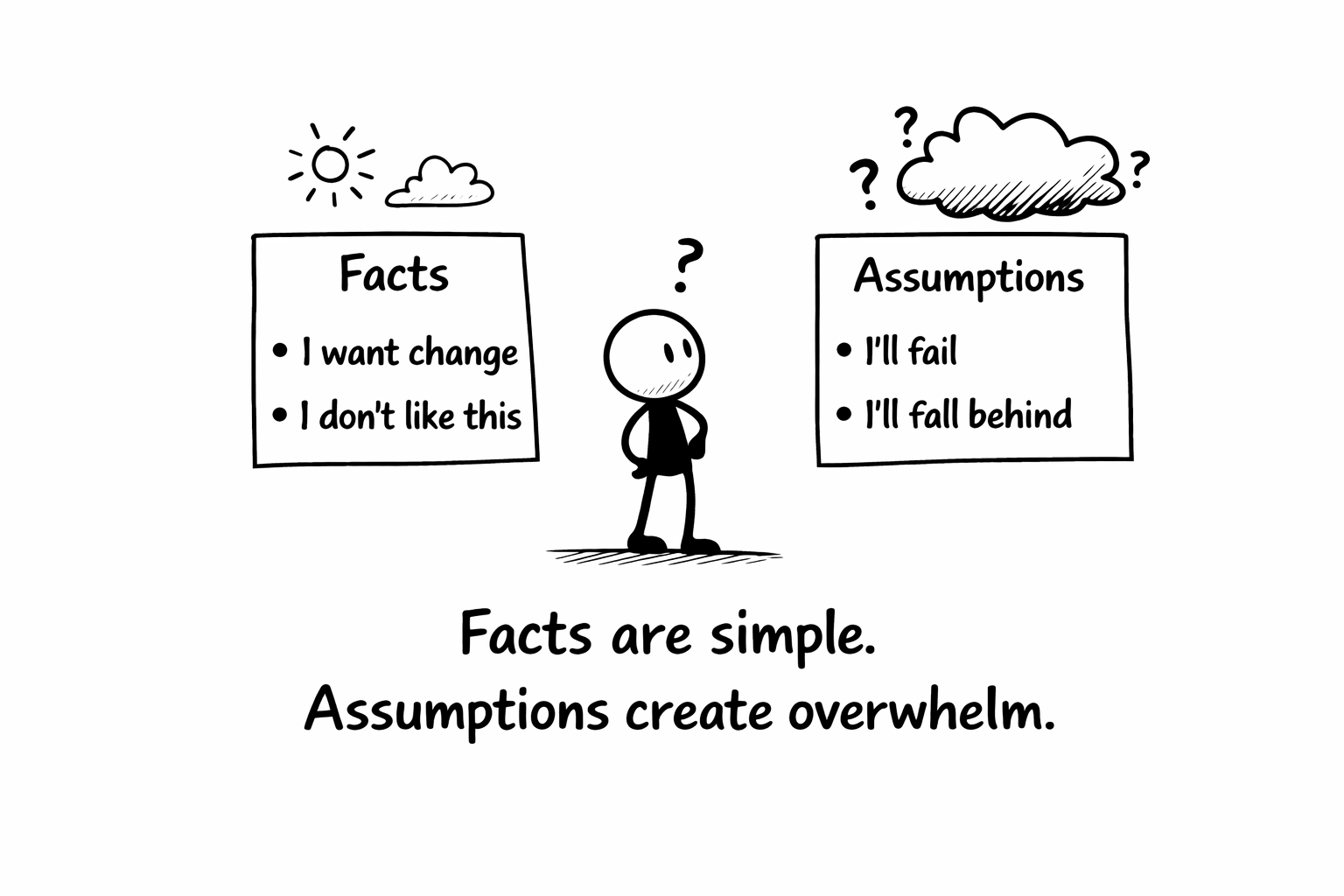
This isn’t a discipline problem. It’s a decision problem.
Every time you go to start, you’re asking yourself small questions like whether now is the right time or where to begin. Those decisions seem minor, but they build up more weight than you expect.
By the time you’re supposed to act, hesitation takes over. And that hesitation is enough to stop you completely.
What Habit Cueing Actually Is
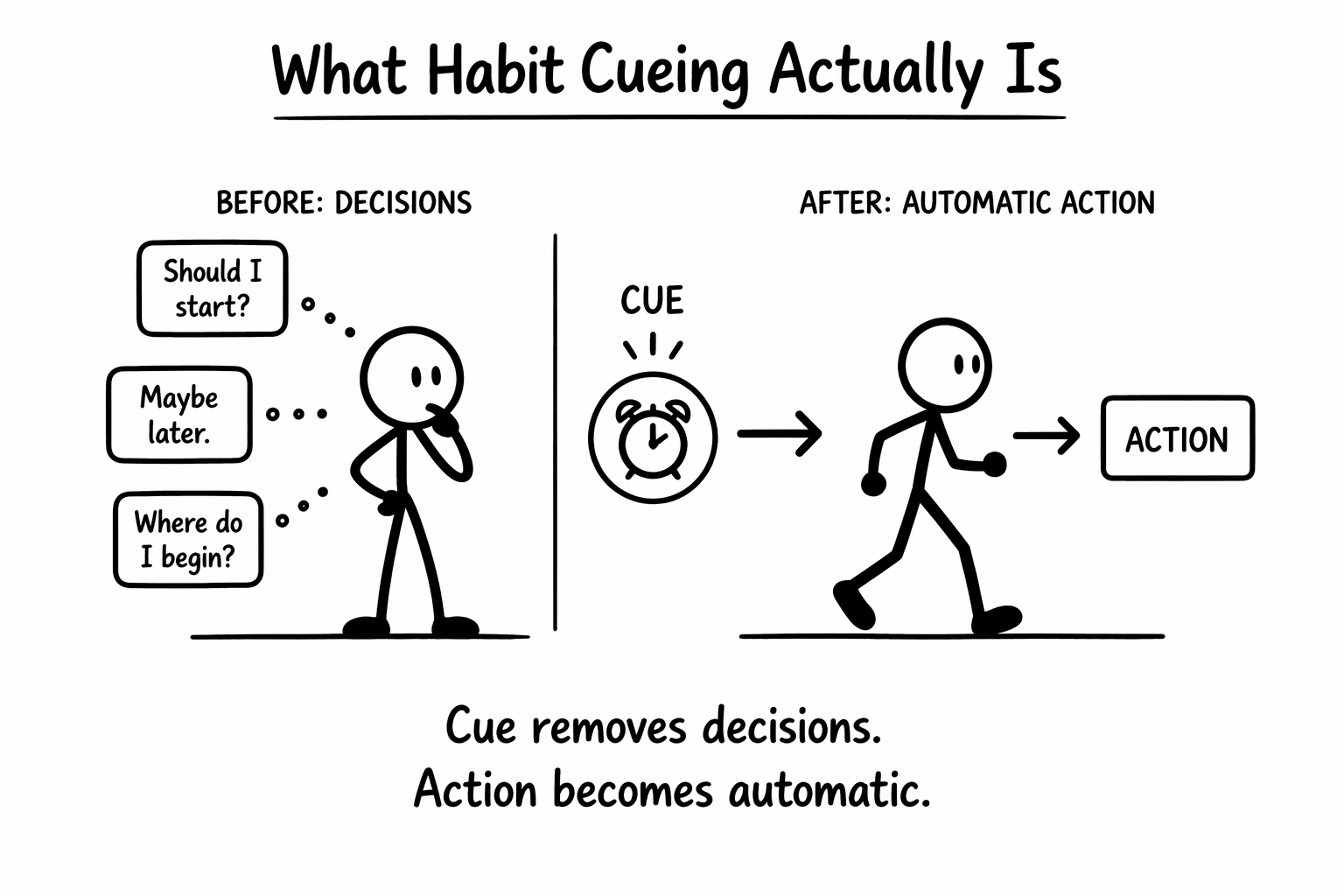
“Habit cueing is the process of creating a clear, specific trigger that tells you exactly when an action should begin.”
At its core, habit cueing removes the need to think in the moment. You’re not asking yourself whether you should start or what to do next, because that decision has already been mae.
Most people don’t fail because they can’t do the habit. They fail because they hesitate at the exact moment they need to begin.
A cue can be something simple and consistent like a time of day, a location, or an action that happens right before. When that cue shows up, the behavior follows without needing to be negotiated.
Why Most People Struggle With This
When you hear the word habits, you probably think it means you need to fix your whole routine. You start picturing discipline, structure, and being consistent across everything.
That’s where it starts to feel heavy before you even begin. And when something feels that big, it’s easier to avoid it than actually start.
What actually helps is making the starting point simpler. When the action is already set up, you don’t need to rely on willpower to get moving.
The Difference in Real Life (How Habit Cueing Actually Works)
We’re going to look at two people who have the same job, the same schedule, and the same level of energy. The only difference is one of them sets things up ahead of time, and the other doesn’t.
As you go through these, pay attention to where the action either happens naturally or gets delayed, because that’s where habit cueing either exists or doesn’t.
Scenario 1: Becoming Consistent with Running
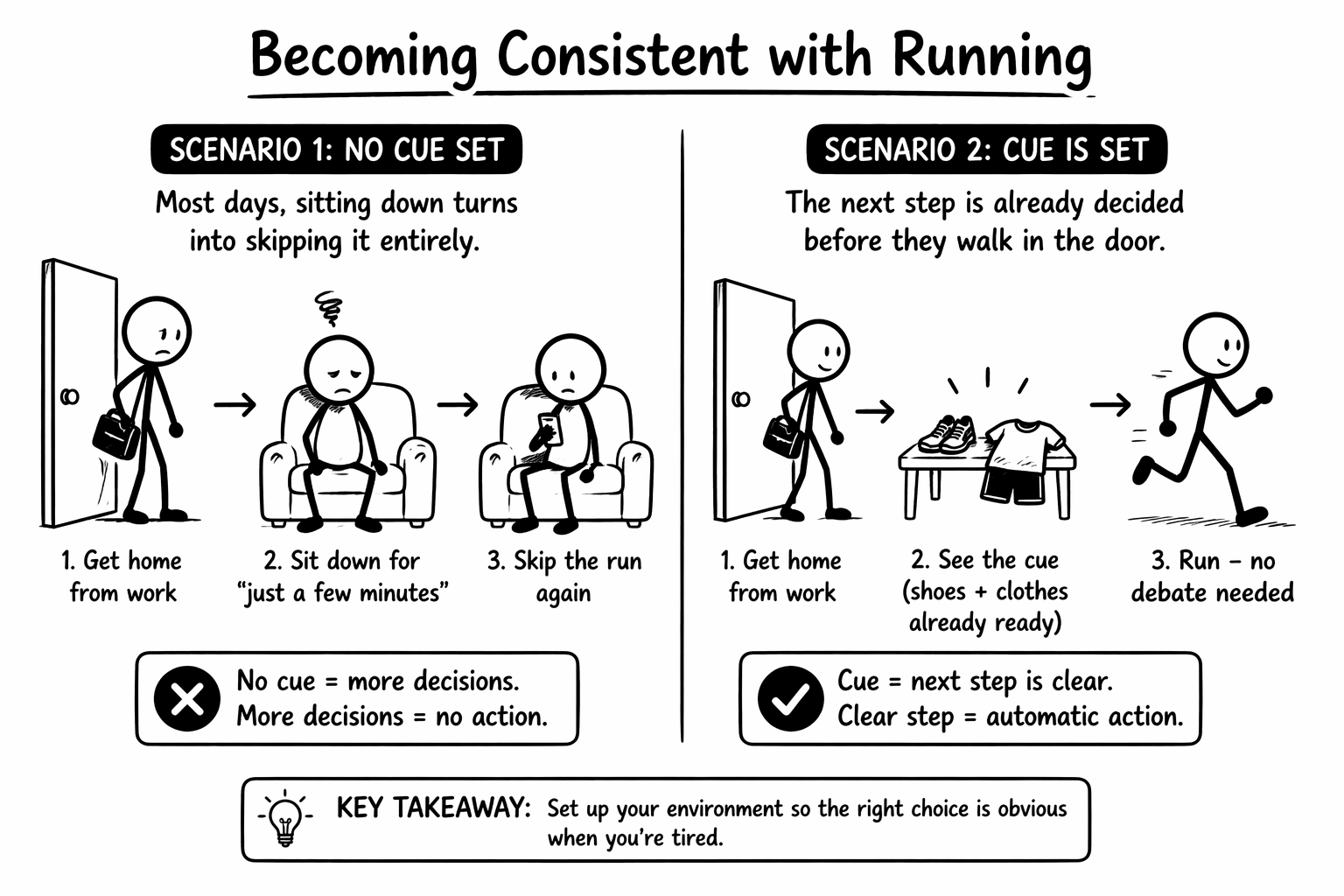
You want to start running after work, but by the time you get home, your energy is low and your brain is done making decisions. Most days, sitting down for a few minutes turns into skipping it entirely.
Where’s the cue:
Person B laid their shoes and clothes out before leaving for work, so when they walk in the door, the next step is already decided. They’re not relying on how they feel, they’re following what’s already been set up.
Scenario 2: Using Time Better (Learning or Growth)
Where’s the cue:
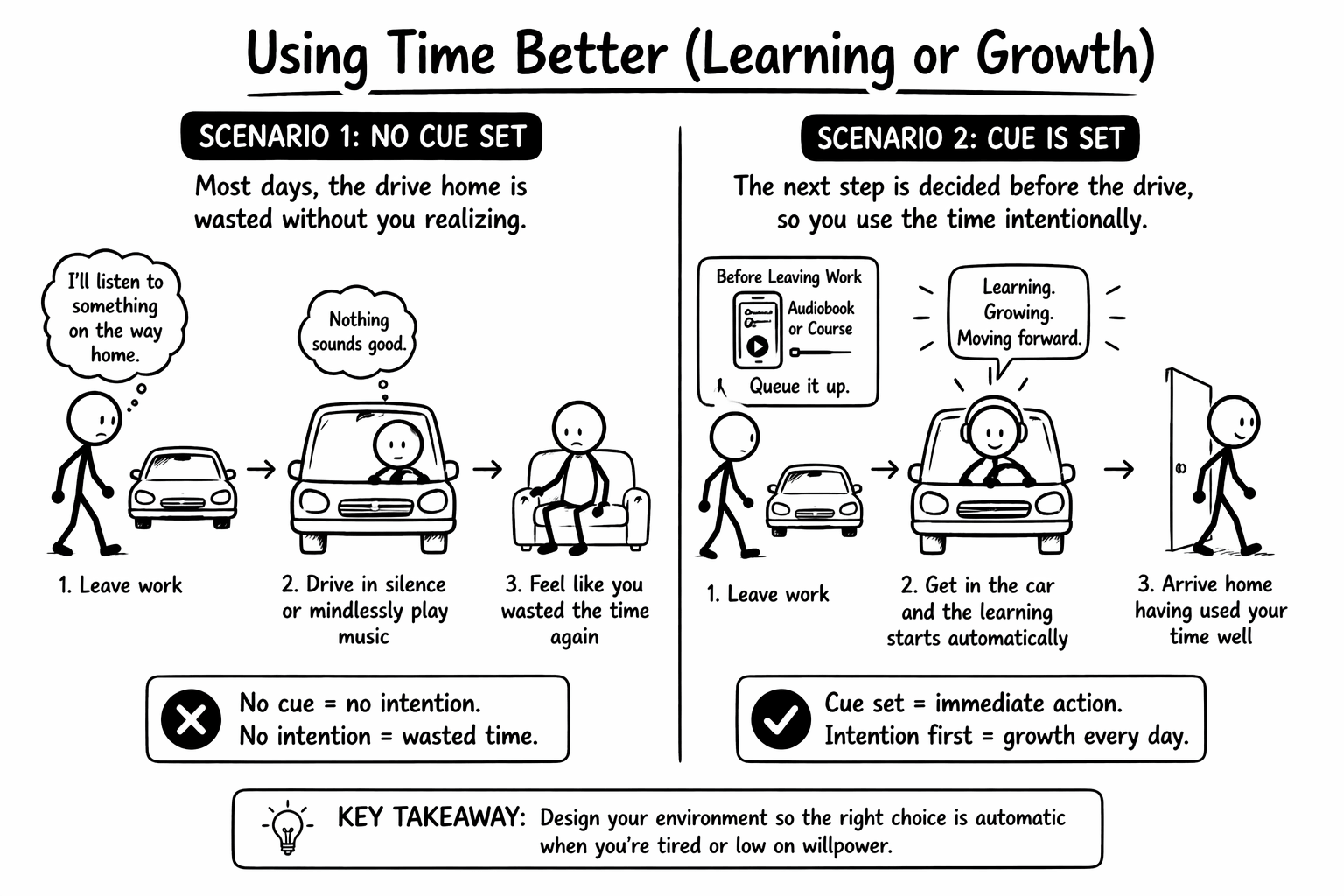
Person B chose what they were going to listen to ahead of time and queued it up, so the drive starts with intention instead of a decision. The cue is getting into the car, which immediately triggers something useful.
Scenario 3: Eating Better Consistently
Where’s the cue:
Person B made the decision earlier when they had energy, either by prepping food or planning it out. The cue removes the need to think when energy is lowest.
Scenario 4: Working on Something After Dinner
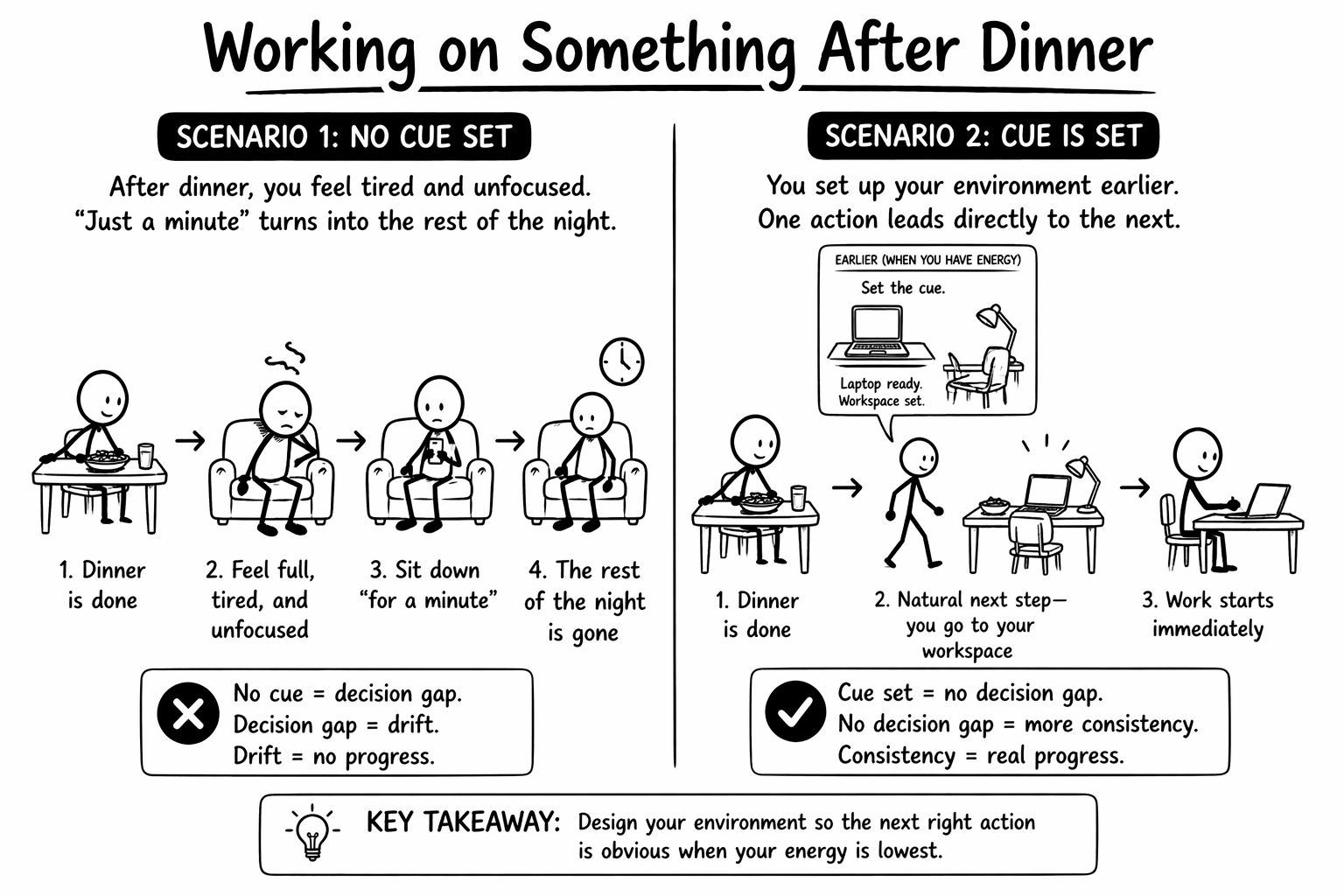
Where’s the cue:
Person B set their laptop up earlier in a place they know they will naturally go after dinner. The cue connects one action directly into the next without a gap to hesitate.
The Pattern (What You Should Notice)
Across all of these examples, the difference is not discipline or motivation. Both people are equally tired, equally busy, and have the same intentions going into the day.
The difference is that one person is making decisions in the moment, while the other already made those decisions earlier. That shift removes the hesitation that usually stops the action.
When there’s no cue, there’s always a pause, and that pause is where most habits fall apart. When there is a cue, the action feels like the next obvious step instead of something you have to convince yourself to do.
How to Actually Use This in Your Life
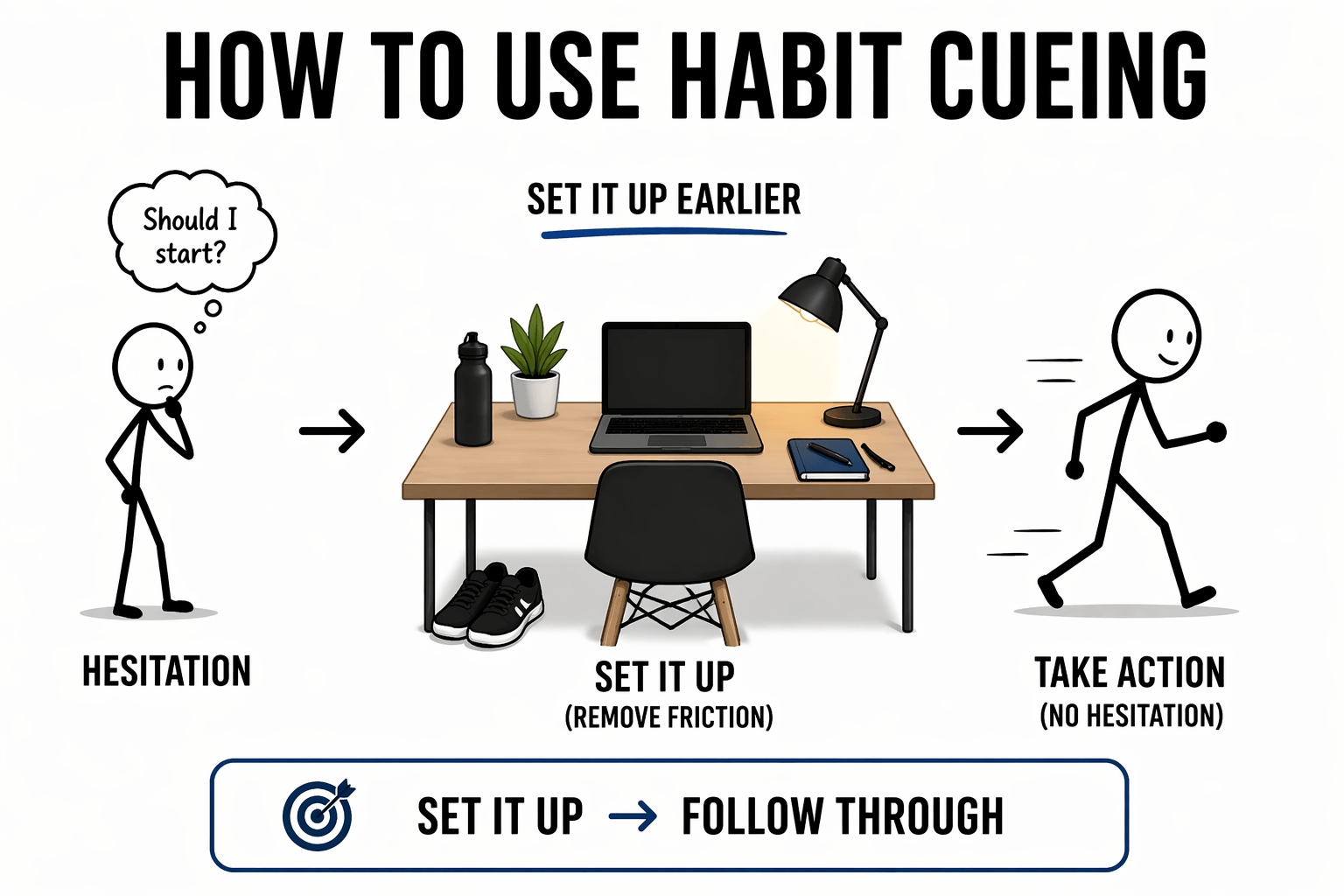
If you want to apply this, keep it simple and focus on one thing at a time. Don’t try to fix everything at once.
Pick one habit you’ve been putting off and decide exactly when and where it will happen. Then set up your environment so that when that moment comes, the action is already obvious.
The goal is not to be perfect. The goal is to remove the moment where you hesitate.
Why This Works Long-Term
Most people rely on motivation, and motivation changes depending on your energy, mood, and environment. That’s why it feels inconsistent.
Habit cueing replaces motivation with structure. It gives you something to fall back on when you don’t feel like doing it. That’s what builds momentum over time. Not perfect days, but consistent starting points.
Final Takeaway
You’re not struggling because you lack discipline or motivation. You’re struggling because too many decisions are left for the exact moment where your energy is lowest and hesitation is highest.
When you start setting things up ahead of time, those decisions disappear. The action is already defined, and the starting point is clear, so you’re not relying on how you feel to get moving. Instead of stopping and restarting every few days, your actions start to stack, and that consistency turns into momentum. Over time, that momentum compounds, and you begin to see progress that actually feels stable.
My hope is that you stop putting pressure on yourself to be more disciplined and start making it easier to follow through. That you remove the moments where you usually hesitate, so action becomes something that happens naturally instead of something you have to force.
A Good Place to Start
If you have questions or feel unsure about what kind of support makes sense, this is a good place to begin. You do not need to have everything figured out before reaching out. Share a bit about what you are working through or where you feel stuck, and we will review it and get back to you. From there, we can help you decide what the next step should be.