First Principles Thinking Explained

The Thinking Mistake That Keeps You Stuck

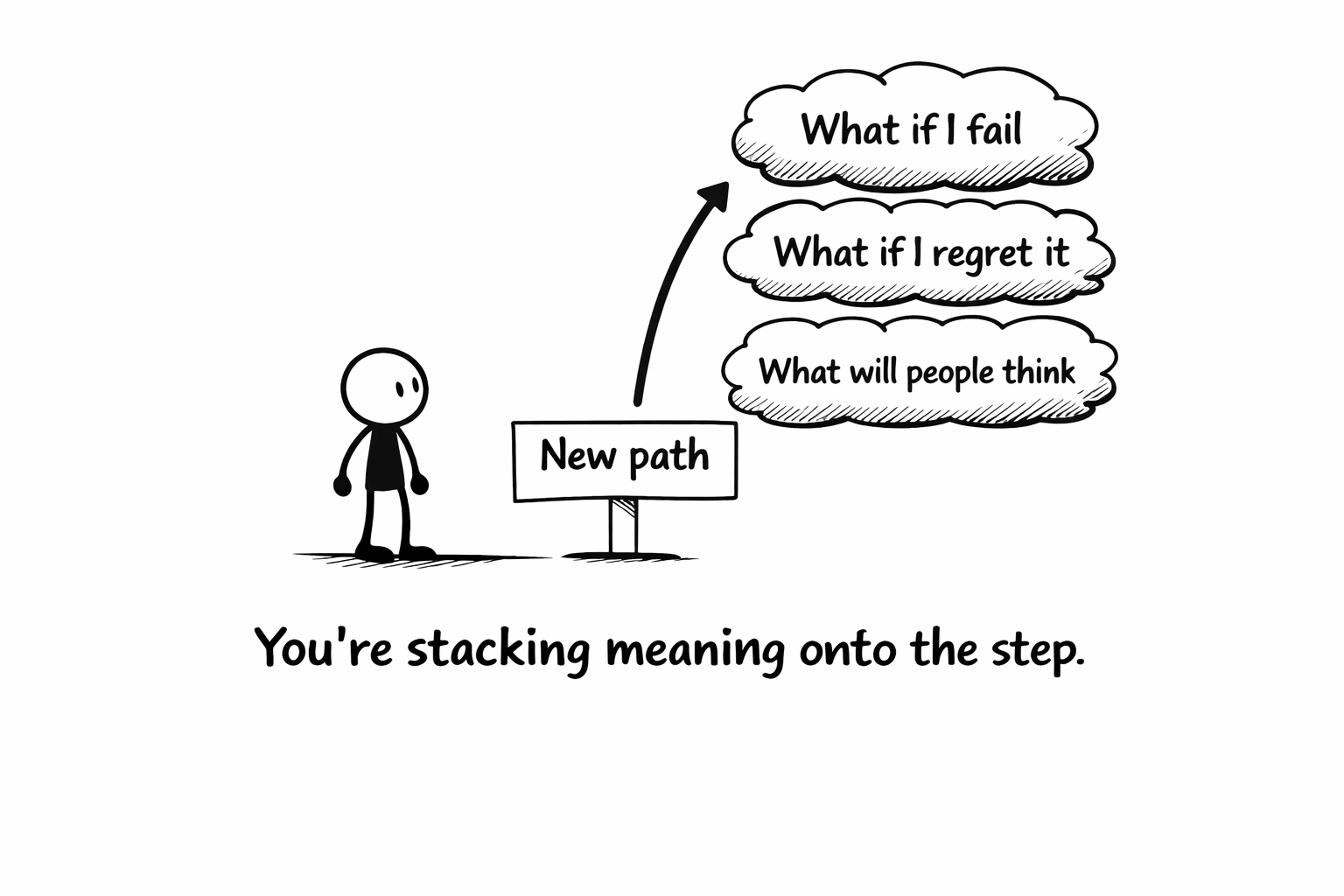
You’ve probably been thinking about making a change for a while. Whether it’s a new job, a different direction, or starting something on your own, it’s been sitting in the back of your mind. But every time you try to take a step, it feels heavier than it should.

You tell yourself you just need more clarity, so you wait instead of moving. Here’s what most people miss. You’re not stuck because you don’t have clarity, you’re stuck because of how you’re thinking. That’s where first principles thinking comes in. And once you understand how to use it, it changes how you make decisions entirely.
What First Principles Thinking Actually Is
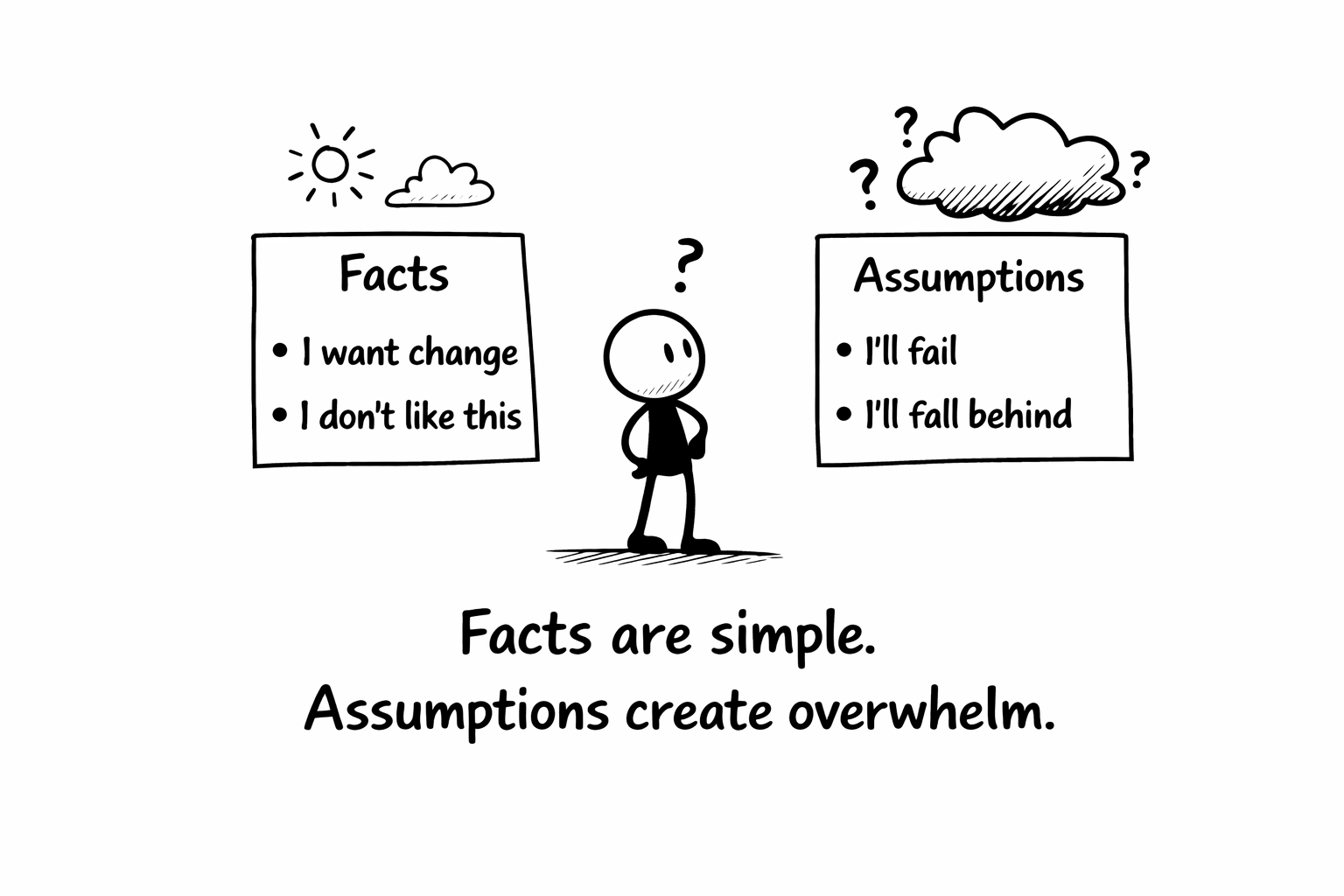
“First principles thinking is the process of separating what is actually true from everything you’ve added on top of it.”

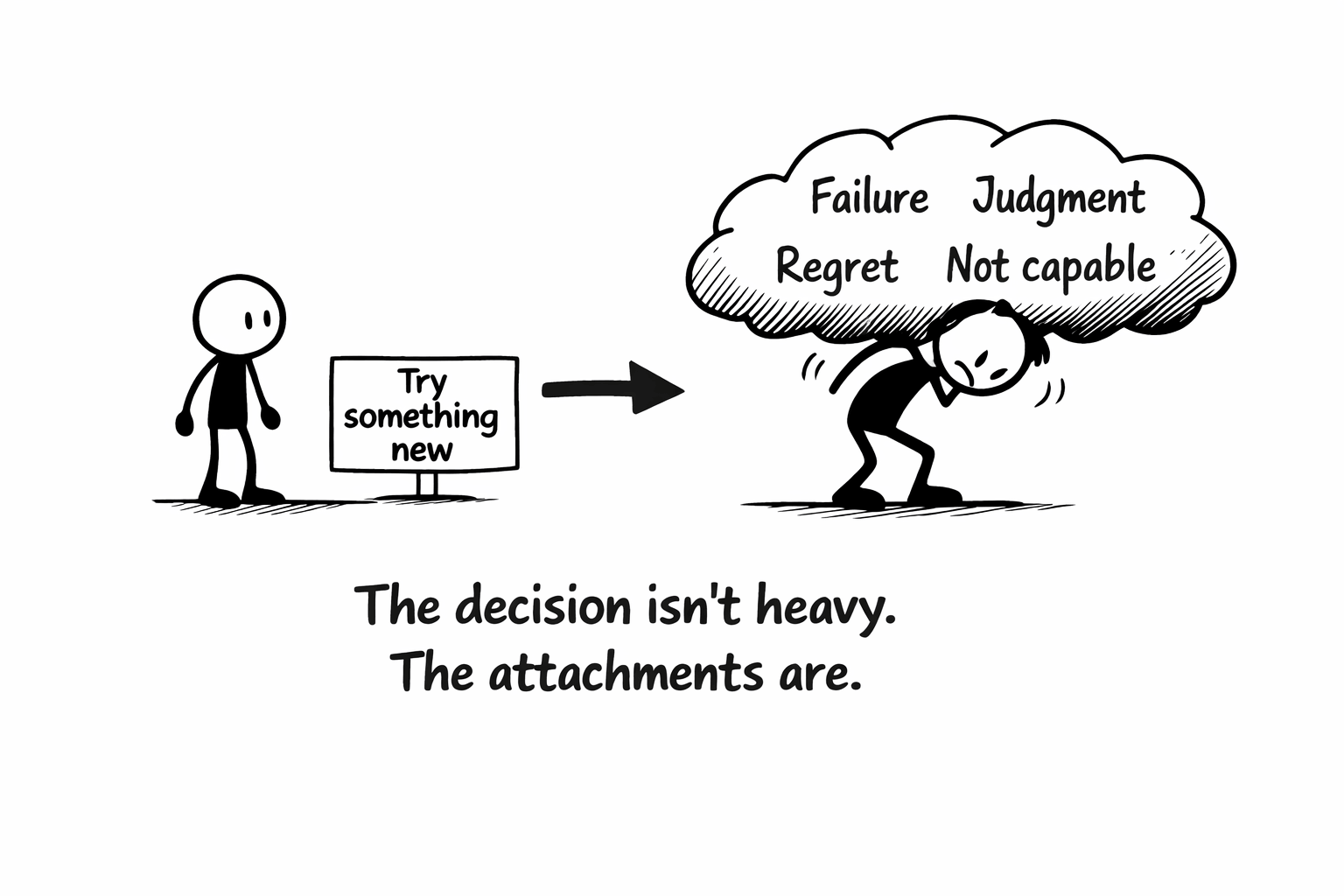
It means stripping a situation down to facts instead of reacting to assumptions, fears, or imagined outcomes. Most of the time, you’re not just looking at the step in front of you. You’re attaching meaning, fear, identity, and future consequences to something that is actually simple. That’s what makes it feel overwhelming. It’s not the decision itself, it’s everything you’ve layered onto it.

Why You Feel Stuck (The Real Problem)

You’re not really deciding anymore. You’re protecting yourself from what might happen.
When you think about making a change, your brain doesn’t just look at the action in front of you. It builds a chain of “what if” scenarios that make the decision feel bigger than it actually is.
You start thinking things like:
  • What if I lose stability
  • What if I fall behind
  • What if I regret it
  • What if people judge me
  • What if I’m not capable
At that point, the decision isn’t just about trying something new. It turns into something that feels like it could impact your entire life. And when it feels that heavy, of course you don’t move. Anyone would hesitate under that kind of pressure.

A Real Example (Why Decisions Feel Bigger Than They Are)

At one point, I was working a stable job with good pay, benefits, and security. On paper, everything looked fine, but I kept thinking about moving in a different direction.
Every time I thought about it, it felt massive. Not because the step itself was complicated, but because of everything I was attaching to it.
Things like:
  • Losing stability
  • Regret
  • Judgment
  • Failing
  • Proving I wasn’t capable
At that point, the decision stopped being a step forward. It became a threat to my identity, and that’s what made it feel so heavy. So I stayed where I was. And that’s exactly what happens when a simple decision turns into something it was never meant to be.

The Shift: Assumptions vs Facts

This is where first principles thinking actually starts. You slow everything down and separate what is real from what you’re projecting. Instead of trying to figure everything out at once, you ask two simple questions. What is actually true here, and what am I assuming?

Most of what feels heavy isn’t real yet. It’s imagined, future-based, and stacked on top of something that is actually simple.

Break It Down Clearly
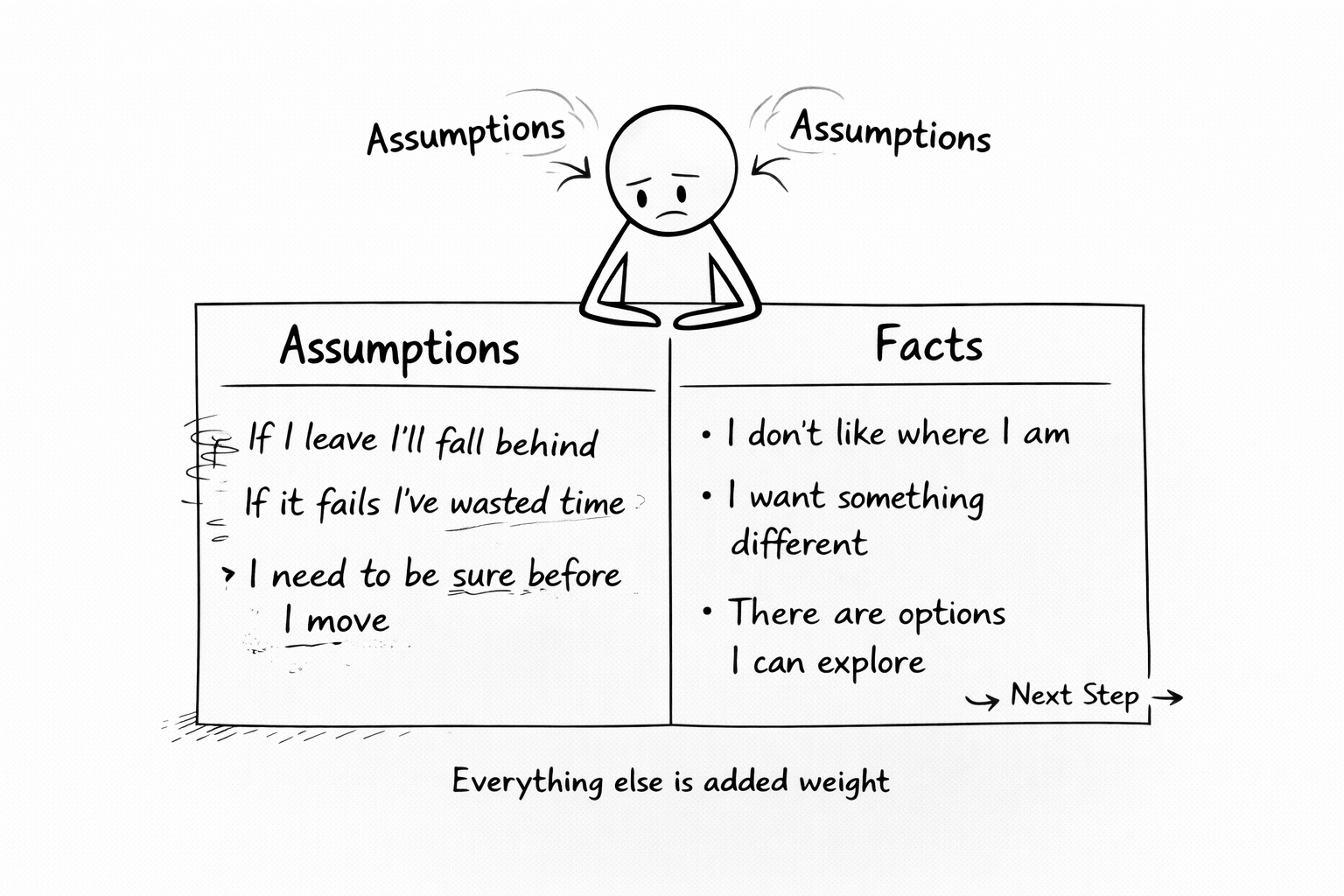
Assumptions (Not Real Yet)
Facts (Real Right Now)
“If I leave, I’ll fall behind”
You don’t like where you are
“If it doesn’t work, I’ve wasted time”
You want something different
“I need to be sure before I move”
There are options you could explore
When you look at it like this, the difference becomes obvious. Facts are simple and stable, while assumptions are what create pressure. And once you see that clearly, something shifts. You stop trying to solve imagined problems and start making decisions based on what is actually real.


That’s why it feels lighter. You’re no longer carrying weight that doesn’t exist yet.

Why Thinking Harder Doesn’t Help

When something feels unclear, your instinct is to think more. You analyze it, research it, and wait until you feel fully certain before moving.

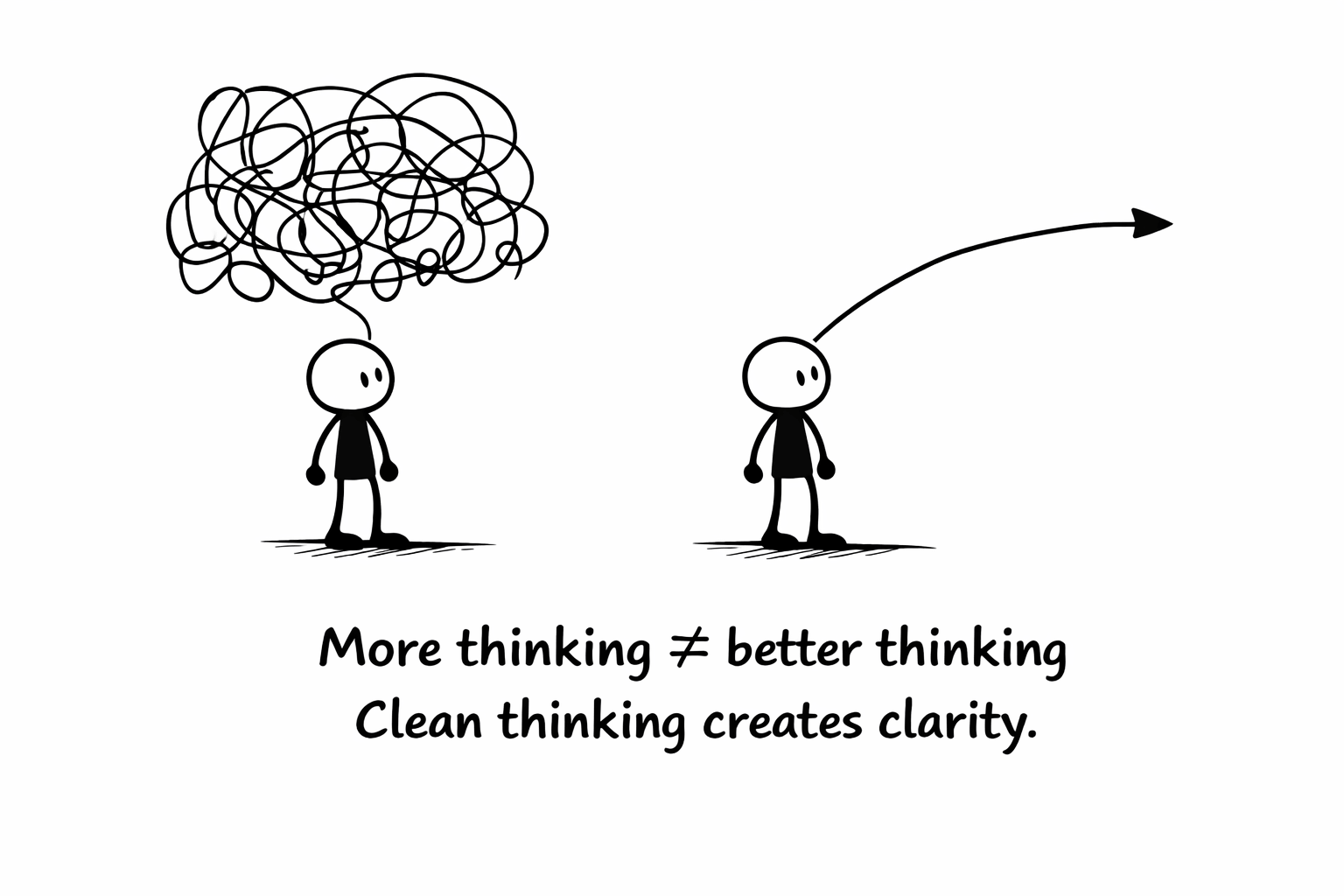
The problem is that this usually makes things worse. The more you think without direction, the more assumptions you add, and the heavier the decision becomes. Clarity doesn’t come from thinking harder, It comes from thinking cleaner. Cleaner thinking removes what isn’t real and focuses only on what is. And when you do that, the decision becomes a lot simpler than you thought.
Stop Solving Everything

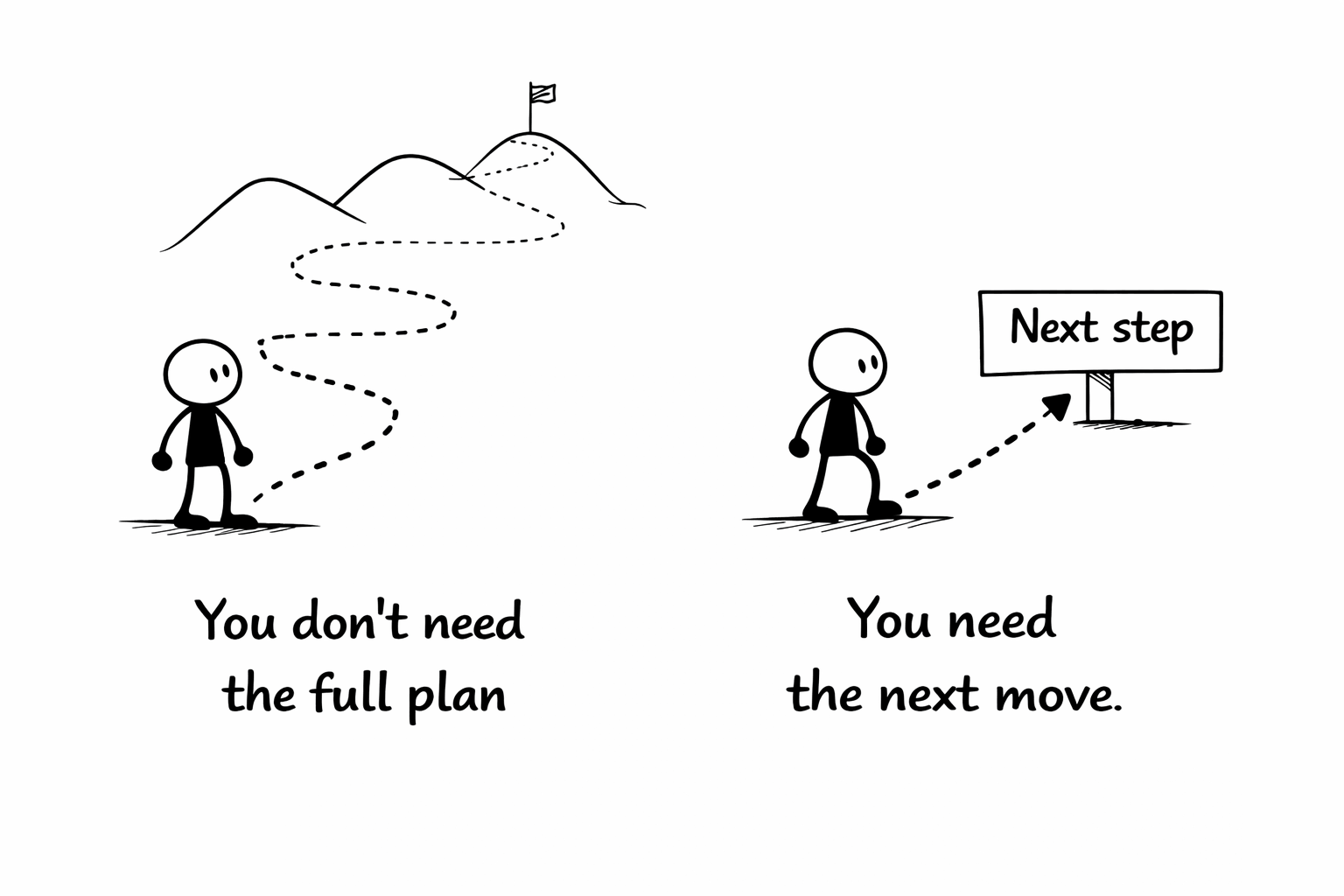
Once you separate facts from assumptions, something changes. You stop trying to solve your entire life and focus on one move. Instead of asking what the perfect decision is, you ask a better question. What’s one real step I can take based on what I know is true?


That might look like updating your resume, reaching out to someone, exploring an opportunity, or starting a conversation. You’re not committing to a completely new life, you’re just moving one step closer to it.

Why This Works (And Why Most People Stay Stuck)
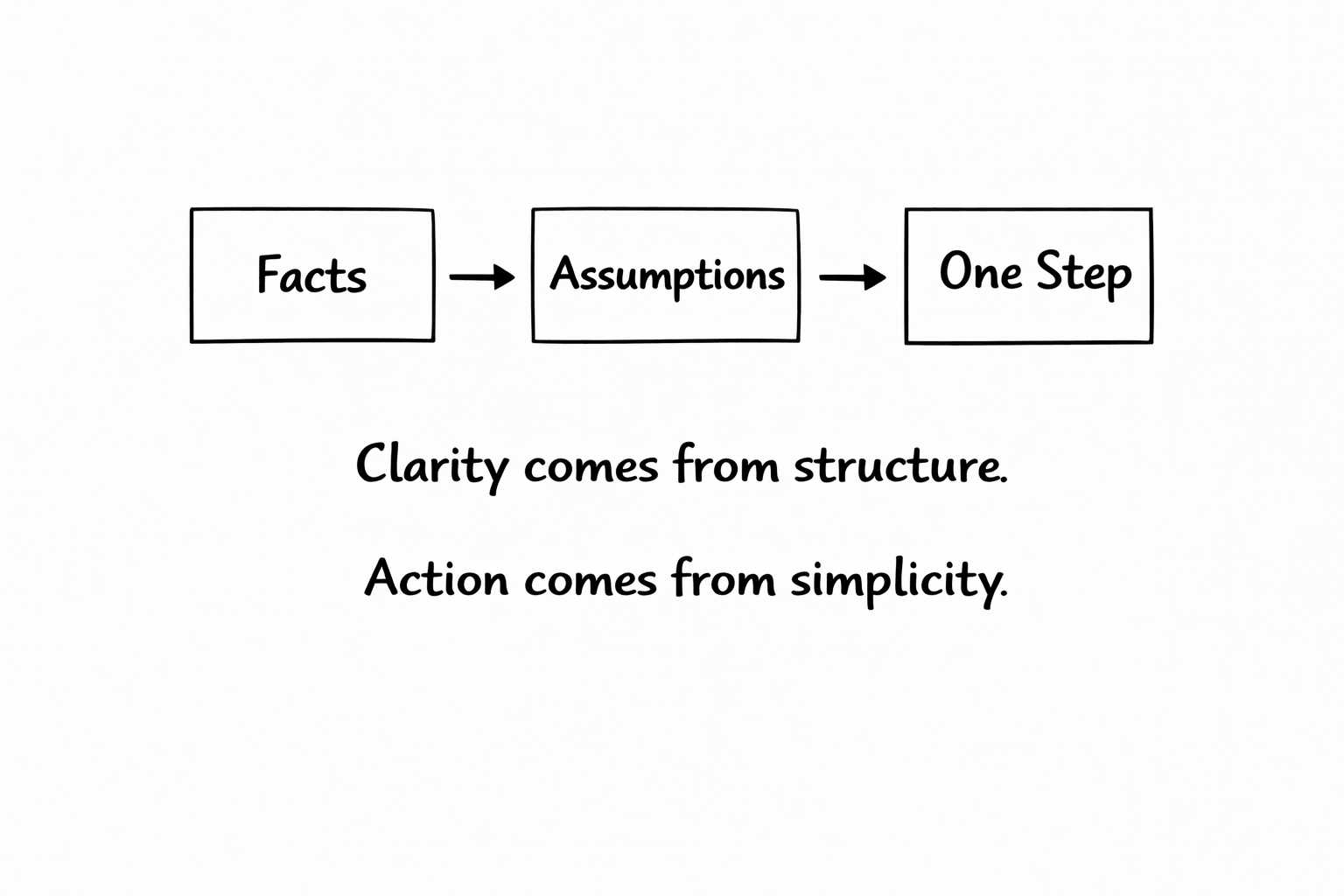
Most people try to figure out the full path before they move, and that’s the trap. The path only becomes clear after you start walking, not before, and trying to solve everything upfront just creates more hesitation.


This isn’t about being lazy or unmotivated. You’re overthinking yourself into inaction by trying to solve things that can only be understood through movement, when what you actually need is a cleaner way to think so you can take the next step.

A Simple Exercise You Can Use Right Now

Most people try to figure out the full path before they move, and that’s what keeps them stuck. The path only becomes clear after you start walking, not before, and trying to solve everything upfront just creates more hesitation.


This isn’t about laziness or lack of motivation. You’re overthinking yourself into inaction by trying to solve things that can only be understood through movement, when what you actually need is a cleaner way to think so you can take the next step.

The Truth Most People Avoid

You don’t need more certainty to start, you need less noise. Certainty doesn’t come before action, it comes after, and the longer you wait to feel sure, the longer you stay stuck. If something in your life feels heavier than it should, take a step back and ask yourself is this actually complicated, or did I make it that way?

What This Means For Your Life

If you start thinking this way, the way you make decisions begins to change. You’re no longer carrying everything that isn’t real, which makes it easier to move forward without overthinking every step.

That shows up in a few clear ways:

  • Decisions become lighter
  • You stop looping
  • You move faster
  • You trust yourself more
This isn’t about being smarter or figuring everything out. It’s about removing what isn’t real so you can act on what actually is.

Final Takeaway

At its core, this guide is about changing how you think so your decisions stop feeling heavier than they need to be. When you strip things down to what is actually true and separate that from everything you’re assuming, you remove the pressure that’s been holding you back and make it easier to move forward.
The key takeaway is simple. Find what’s real, ignore what isn’t, and take one step based on that. You don’t need the full plan, and you don’t need certainty before you start, you just need a clear next move.
My hope for you is that you stop feeling like you’re stuck in your head and start seeing that most of what’s been holding you back was never real to begin with. Once you see that clearly, it becomes a lot easier to trust yourself and actually move.

A Good Place to Start

If you have questions or feel unsure about what kind of support makes sense, this is a good place to begin. You do not need to have everything figured out before reaching out. Share a bit about what you are working through or where you feel stuck, and we will review it and get back to you. From there, we can help you decide what the next step should be.

Connect With Us